Collaborative Management

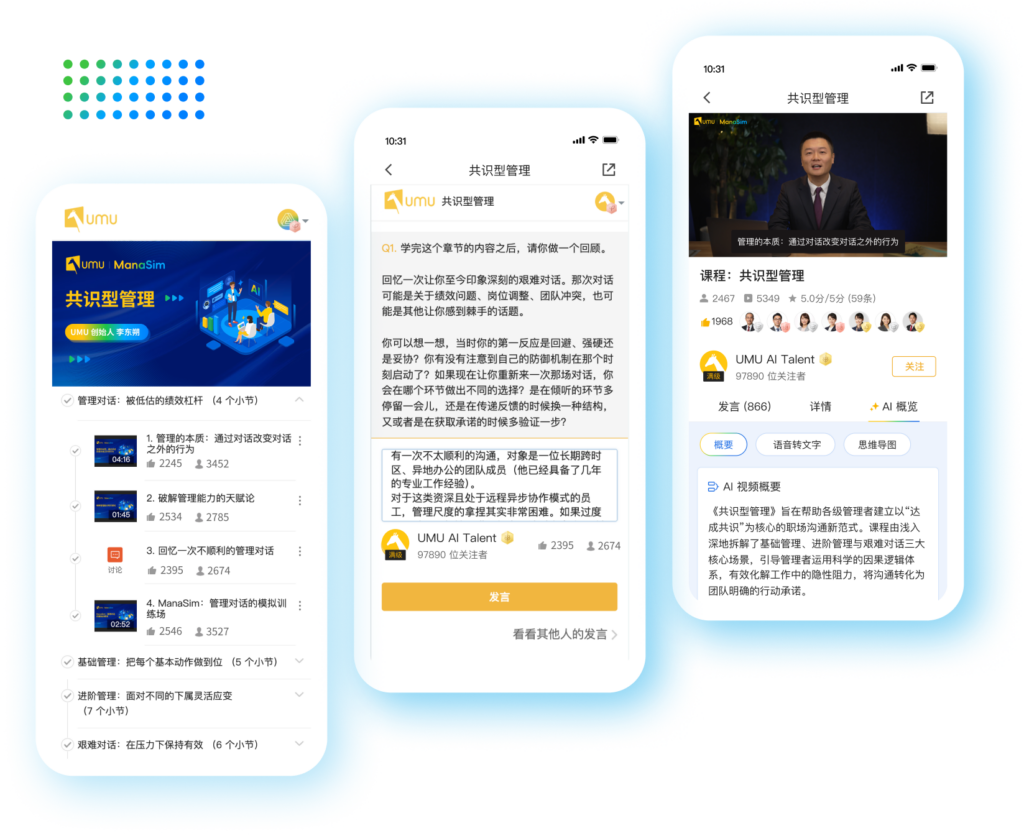
This course provides a methodology for managers to build consensus through dialogue with their subordinates. It breaks down 20 dialogue actions to help managers reach consensus in key communication scenarios, enabling team execution to begin with consensus.

Familiar management methods are becoming ineffective.

Despite repeated emphasis, deliverables still fall short

The requirements were clearly stated, but the results delivered by subordinates still fell short of expectations. To ensure the outcome, the manager could only keep following up and making repeated revisions, ultimately returning the important work to the manager.

Despite delegation, decisions still rest with the manager

When subordinates encounter problems, they tend to rely on the manager's judgment and wait for instructions, rather than proactively analyzing and solving them. Over time, the team's progress depends on the manager's judgment and energy alone.

Despite rounds of feedback, behavior stays the same

I've tried face-to-face meetings, reminders, and coaching, but the same problems keep recurring back in the workplace. Feedback has gradually become just another form of communication, rather than leading to real growth.

UMU Collaborative Management: From Giving Orders to Building Consensus

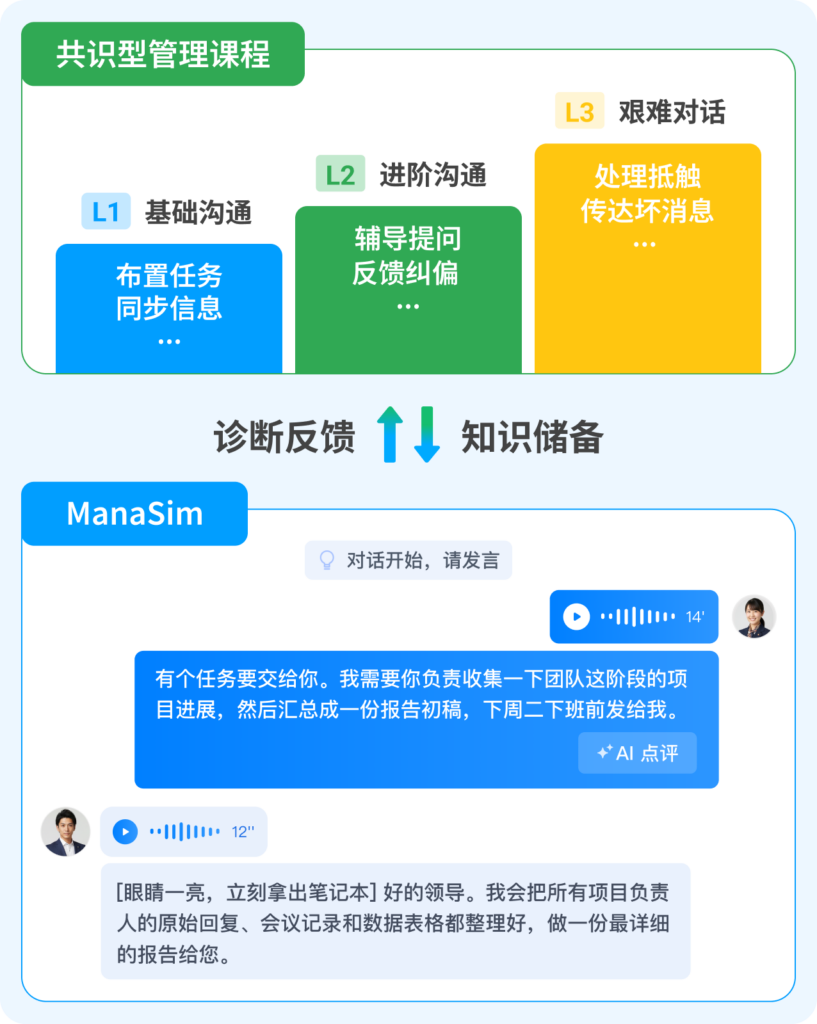
When assigning tasks: Align on goals

Managers clarify task requirements, delivery standards, and expected results through two-way confirmation, ensuring that both parties reach a consensus before action and reducing execution deviations.

When coaching: Co-create the plan

Managers listen and ask questions, analyze problems together with their subordinates, guide them to proactively propose solutions, and gradually improve their business judgment.

When giving feedback: Agree on improvements

Managers provide feedback based on specific behaviors and facts, working with subordinates to identify effective practices and areas for improvement, ensuring that each communication drives continuous change.

Why Collaborative Management

What management training misses

Management responsibilities continue to increase, but systematic training remains insufficient. Business pressures are gradually being transmitted to frontline managers, but the development of management capabilities has long lacked a systematic approach, relying instead on the accumulation of managers' experience.

There are many conceptual frameworks, but a lack of support for practical application. Most management training focuses on general concepts and models, lacking analysis of real-world management scenarios and behaviors.

Directive management is struggling to adapt to new organizational environments. The old approach of relying on explicit instructions to drive execution is increasingly challenging in complex business environments, and management needs to shift from one-way communication to consensus-based dialogue.


What Collaborative Management solves

Reconstructing management cognition and establishing a consensus-based management philosophy. The course helps managers understand the management logic of the new era and promotes alignment between goals, actions, and results through dialogue.

Focusing on real-world scenarios, we break down key management actions. Based on the core dialogue scenarios in the management process, we break down the methodology into 20 actionable management steps.

From problem reflection to methodological application, the course fosters a shift in understanding. Through case discussions, participants are guided to review their own management practices, connecting the methods with real-world work scenarios.

Course Empowerment Targets

Senior managers

Facing complex business and organizational challenges, there is a need to continuously enhance management influence. This course helps individuals reconstruct their management understanding and handle challenging management conversations.

First-line manager

They face daily challenges in task progress, employee coaching, and team collaboration. The course helps them review their management habits and improve their communication skills in real-world scenarios.

New Managers

Having just transitioned from a key business role, the focus needs to shift from "doing business well" to "leading a team effectively." The course helps them establish systematic management methods and master key management actions.

Achieving behavioral change through a closed-loop learning and practice process

Personal level

Through learning and practice, managers master systematic dialogue methods. These methods are then transformed into stable management capabilities in different management scenarios.

Team level

Changes in management communication methods lead to clearer goals and actions. Teams reach consensus through continuous dialogue, improving collaboration efficiency.

Organizational level

Management experience is distilled into unified management standards and training systems. The organization is able to continuously develop managers and improve overall management capabilities.

Developing management skills through learning and practice
Let consensus drive execution, and let dialogue focus on business outcomes.