AI Empowers HR

Empowering the Next Generation of Strategic HR Talent with AI

Is your team facing these challenges?

Enterprises introduce AI
But it has not truly been implemented.

Phenomenon
The company has introduced AI tools, but only a few people actually use them, and they have made almost no contribution to improving the overall organizational efficiency.

Reason
AI tools have been introduced, but the step of employees actually using AI and generating business value is still far from being achieved.

Individual skill gap
Hidden Career Crisis

Phenomenon
The productivity gap between employees who are proficient in using AI and those who are not continues to widen, but organizations lack objective training programs.

Reason
The widespread adoption of AI is quietly reshaping the competitive landscape of the workplace, with productivity gaps widening. Most employees are unaware of this gap, and their professional competitiveness is eroding without them even realizing it.

The speed of AI technology change
Exceeding HR Response Boundaries

Phenomenon
Business units are pushing AI applications on their own, and the human resources department can't keep up with the pace, gradually becoming a marginalized role and unable to provide strategic support to the business.

Reason
The HR team is too busy maintaining daily operations to manage and lead the organizational changes and compliance governance brought about by AI.

Why are AI applications failing to translate into real organizational results?

Trapped in an internal corporate perspective
Lack of awareness of external changes

Bound by existing internal rules and practices, the company is unable to integrate changes in the external environment into its personnel strategy.

Focusing solely on the current internal situation makes it impossible to predict the changes in the market and competitive landscape brought about by AI. What is truly needed now is the ability to derive strategies from an external perspective, and the ability to conduct systematic external environment analysis using AI.

Mistakenly believed that AI was used frequently.
AI skills will improve naturally.

Simply using it frequently will only solidify inefficient habits and increase business costs.

True AI literacy refers to the ability to critically examine AI outputs and responsibly translate them into real business value. This requires systematic learning and cannot be formed naturally through "extensive use."

An AI revolution is underway.
HR should not just be a bystander.

Enterprises often impose numerous restrictions due to concerns about compliance risks, or mistakenly treat the introduction of AI as a one-way task for the IT department, resulting in a serious disconnect between technology and front-line business.

HR should proactively build an organizational culture and governance norms that promote human-machine collaboration, adhere to a people-centered approach, and become a core force driving AI transformation.

The fundamental difference between UMU courses and traditional corporate AI training

AI training for traditional enterprises

Focus on the operating instructionsThe course primarily focuses on explaining how to write prompts and the functions of the tools; how to apply them in actual work is entirely up to the students to figure out on their own.

Stopping at personal skillsFocusing on individual efficiency tips has no substantial impact on overall organizational productivity or culture development.

One-way teachingThe training primarily uses videos and lectures, but when faced with complex problems at work, trainees still don't know what to do.

UMU Course Features

Emphasis on core competenciesBased on the SHRM international framework, AI is used to truly extend HR's core professional capabilities, helping HR become a strategic business partner.

Directly drive organizational changeWith the goal of truly implementing AI within organizations, the system covers everything from cultural development to institutional safeguards.

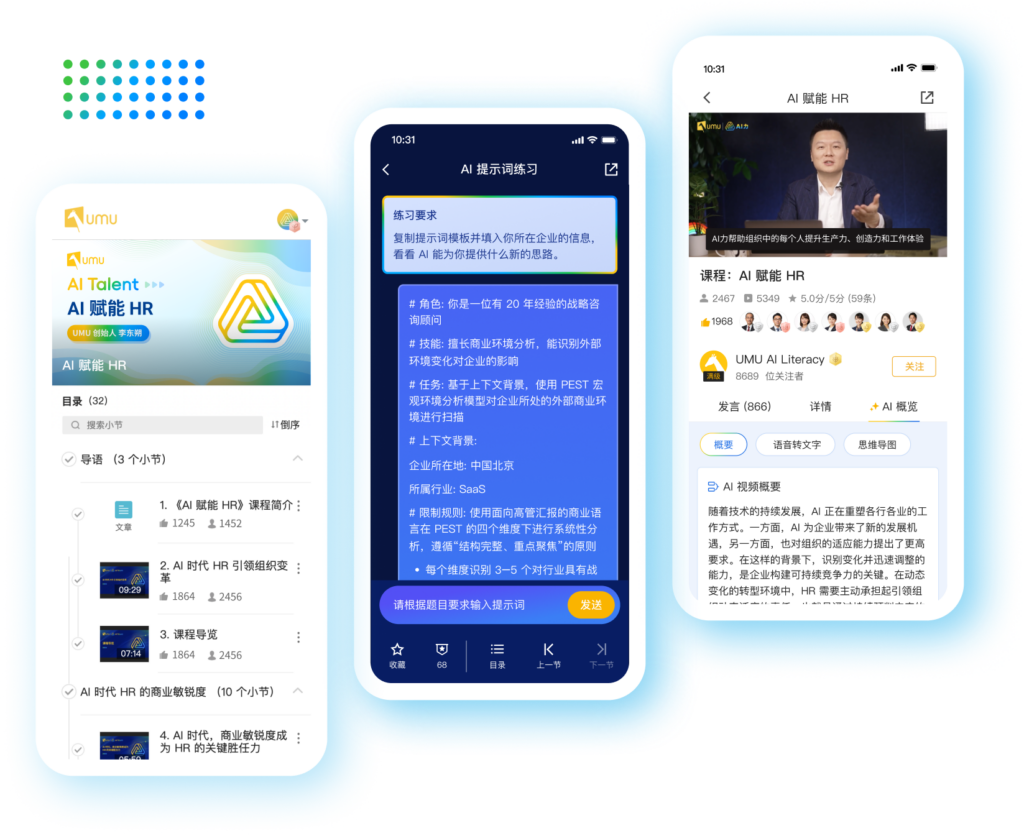
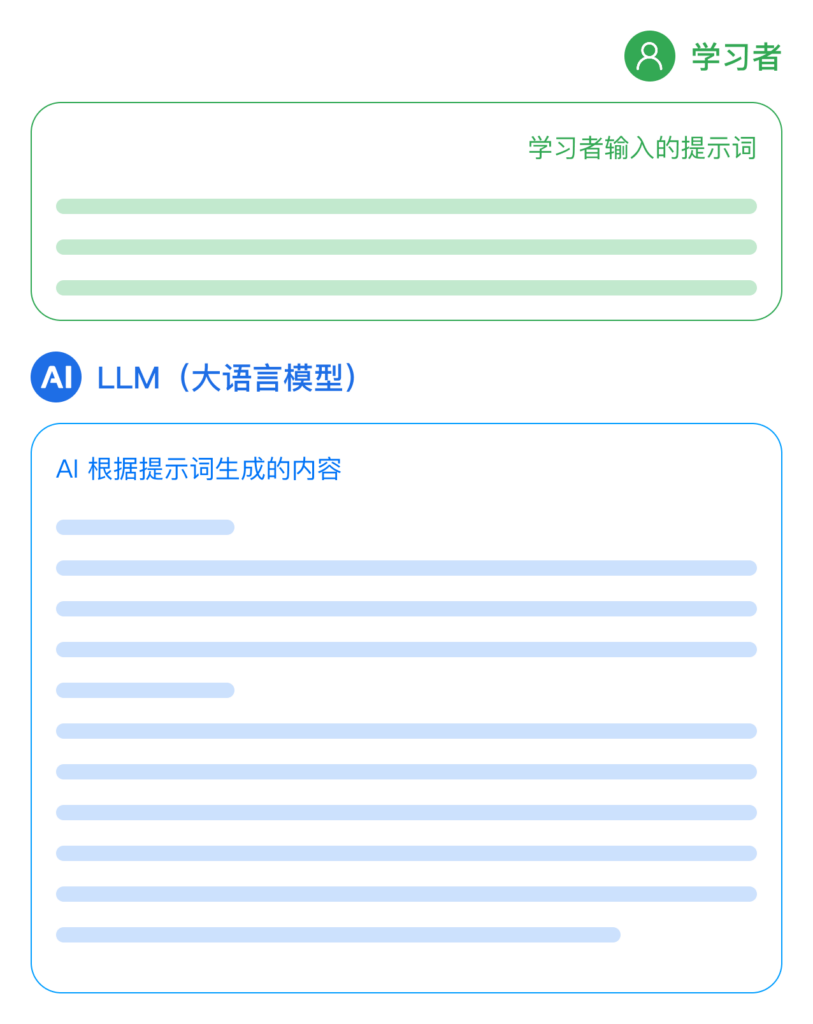
Real-world AI drillsUMU's unique AI-powered training module ensures that you truly master skills that can be directly applied to your work.

AI empowers HR to achieve
Four core competencies based on the SHRM international framework

Business acumen

Core Methodology
- Establish an outside-in analytical perspective and systematically design key business dialogues.
- Transforming changes in the external environment into a valid basis for internal decision-making
- Introducing the RSTCC prompt word framework

AI empowerment
- Activate the large-scale model deep search mode to track the latest developments in policies, industries, and markets in real time.
- Based on a mature thinking framework, systematically perform external macro-environment scanning.
- Leverage AI to design key conversation topics, effectively facilitating high-quality business discussions within the organization.


Learning benefits
- Facilitate the dynamic alignment of talent strategy with business objectives, ensuring that organizational capability building can respond in real time to changes in the external macro environment.
- Reshape the HR function and build forward-looking strategic planning capabilities based on data-driven approaches.

Leadership and Navigation

Core Methodology
- Establish a five-dimensional framework for AI implementation to systematically advance the organization's AI transformation process.
- Build deep AI literacy
- Establish a trust and verification mechanism, and clearly define the hierarchical implementation of process checks and result verification.

AI empowerment
- Establishing a five-element system framework to promote the application of cutting-edge technologies
- Based on the principle of user responsibility, design a tiered AI governance scheme.

Learning benefits
- Addressing the systemic challenge of measuring actual output after the introduction of AI tools enables AI technology to truly be effective within organizations.
- Transform fragmented individual exploration experiences into replicable organizational capabilities, ultimately creating a scalable competitive advantage.

Communication and Relationship Management

Core Methodology
- Implement a three-stage communication strategy to address the three core challenges of audience engagement, information comprehension, and action conversion step by step.
- Develop a crisis tiered response strategy to accurately match differentiated response methods.
- Introducing the TCC cue word framework

AI empowerment
AI-assisted optimization of asynchronous communication workflows
- Use AI to support synchronous communication scenario simulation
AI-assisted development of differentiated crisis communication plans

Learning benefits
- Reduce internal organizational communication costs, accurately filter information noise, and significantly improve communication efficiency.
- Enhance the organization's resilience in responding to complex crises and establish an agile and efficient crisis response mechanism.

Ethical Practice

Core Methodology
- Clarify the boundaries of AI use in core scenarios
- Implement data compliance agreements
- Establish a transparent notification mechanism
- Introduce a continuous review mechanism

AI empowerment
- Clearly define the boundaries of technology use in high-risk decision-making scenarios
- Assist in developing enterprise-level standard protocols that comply with data privacy and compliance requirements.
- Establish a regular review and assessment mechanism

Learning benefits
- Mitigating legal compliance risks and potential data breaches to ensure cutting-edge innovation always operates within a secure framework.
- Maintain organizational cohesion during the technology transformation cycle and continuously strengthen the foundation of trust within the team.

AI Hands-on Practice: Practicing in Real-World Scenarios

Strategy and Analysis

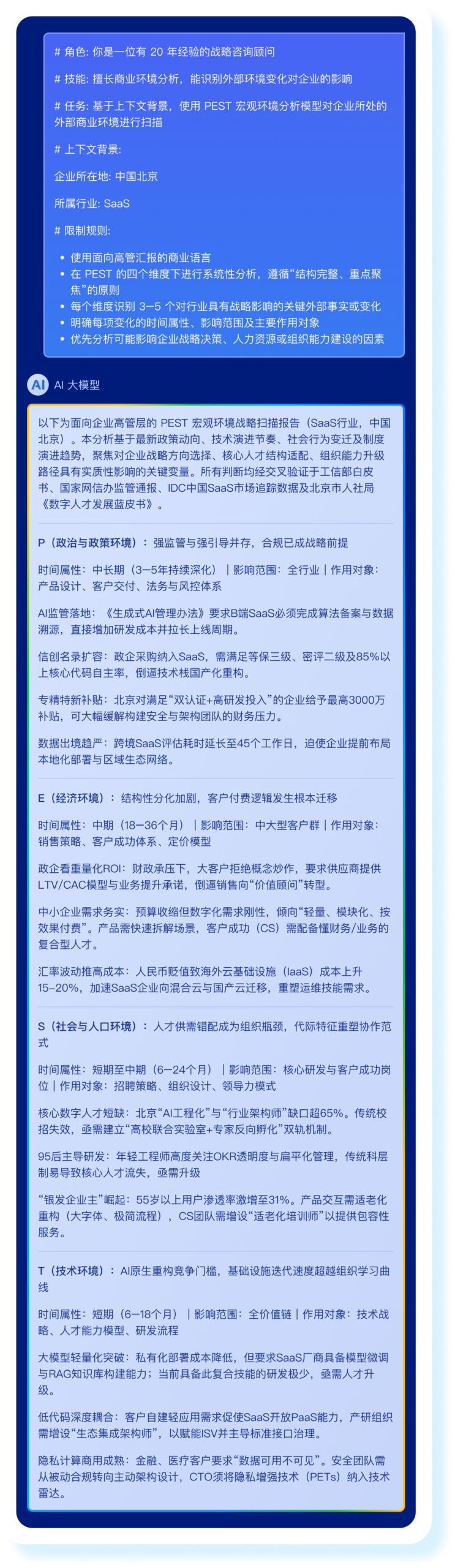
Use AI to perform a comprehensive scan of the enterprise's external environment.
Develop persuasive strategic recommendations for management
Develop a company-wide roadmap for AI transformation.

Communication and Management

Using AI to simulate feedback that can generate a sense of identification.
Conduct thorough rehearsals for high-difficulty communication.
Identifying compliance risks of AI use in HR work

UMU AI-Powered HR Course
Three levels of profound changes brought to enterprises

From an HR perspective: Enhancing professional value

Transform from passive users of AI to professionals who can leverage it. Free HR from tedious tasks and allow them to focus on strategic work that truly demonstrates their value.

At the HR team level: Establishing the status of a business partner

Using business data and strategy as a common language, we engage in equal dialogue with management and business departments, becoming a true strategic business partner.

Organizational Level: Gaining Sustainable Competitiveness

To truly implement AI within organizations, enhance overall organizational productivity and innovation, and help organizations possess the ability to continuously iterate and flexibly respond to change.

Who is this course designed for?

Senior Management

Executives seeking to lead the use of AI to enhance organizational capabilities and build a sound governance system from a human capital strategy perspective.

HRBP/HR Department Manager

HR managers who want to lead their teams in applying AI to improve their return on investment (ROI) and drive organizational change.

HR professionals

HR professionals who hope to leverage AI to improve work efficiency, thereby enhancing their professional value and workplace competitiveness.

UMU Talent Certification

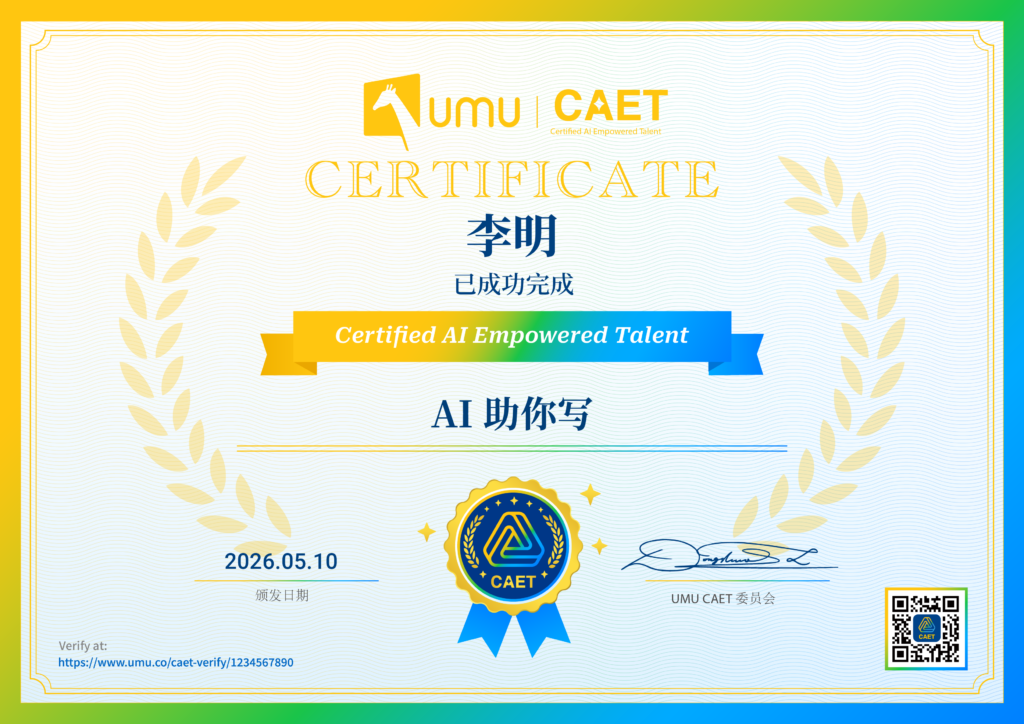
UMU CAET Certification
Certified AI Empowered HR

Upon completion of the course, you will receive a certificate.

Downloadable and shareable links

Shareable to social media

Milestones in employee learning outcomes

The organization's key human assets

Empowering the Next Generation of Strategic Human Resources Talent with AI