AI Empowered Time Management

This course delves into the underlying logic of cross-business line consensus, fully integrating AI-powered intelligence to empower project managers to accurately align with stakeholder expectations. In complex environments lacking formal administrative authority, it skillfully coordinates resources from multiple parties, drives efficient cross-team collaboration, and ensures high-standard project delivery.

Common pain points of traditional project management

Cognitive biases lead to the normalization of rework.

The failure to fully align requirements with key stakeholders in the early stages led to deviations between deliverables and expectations, resulting in a quagmire of repeated revisions.

It was only near the delivery deadline that it was discovered that a key decision-maker had been overlooked, and key milestones were completely rejected, causing the team to lose all their previous efforts and be forced to start all over again.

Cross-departmental collaboration is proving difficult.

There are invisible barriers between departments, and their performance indicators and positions are different, making it difficult to align goals. This results in high communication costs and makes it time-consuming and laborious to reach a consensus.

Cross-departmental collaboration lacks standardized mechanisms and relies heavily on the personal experience of project managers. Who to contact and when to engage are entirely based on intuition, leading to internal friction and immense frustration within the team through repeated coordination and alignment efforts.

The Dilemma of Authority-less Leadership

Project managers typically lack direct administrative authority, making it difficult to mobilize resources across departments. The lack of enforceable measures to ensure project progress easily leads to stagnation.

Management efforts can easily get bogged down in "transactional" tasks. Over-focusing on progress bars and to-do lists masks strategic blind spots with tactical diligence, while neglecting the core element that determines the success or failure of a project—stakeholder expectations and satisfaction management.

The underlying logic of project management

The truth behind frequent rework
The problem lies in the lack of expectation management

The criteria for measuring project success have long surpassed simply "completing the task"; achieving "maximizing stakeholder satisfaction" is the true core. It is essential to uncover and accurately identify the implicit expectations of all parties at the project's inception, clearly define the boundary conditions for satisfaction, and use these as the management axis throughout the entire lifecycle.

The crux of hindered collaboration
In blindly trusting the surface-level reporting line

We must break free from the limitations of superficial reporting lines and conduct a deep, structured analysis of the underlying networks of interests across departments. By accurately defining stakeholder priorities, identifying the specific targets for gaining support, managing expectations, and alleviating concerns, and then developing customized communication strategies, we can transform potential obstacles to implementation into tangible support.

The root cause of leadership bottlenecks
The problem lies in the simplistic logic of persuasion.

By deeply understanding the core needs of different stakeholders and reconstructing the persuasive logic based on the business value they care about most, we can directly address their pain points. By accurately targeting the interests of all parties, we can comprehensively establish strategic cross-departmental influence and lead the team to achieve a leadership leap from passive execution to proactive empowerment.

Why is traditional project management training ineffective?

Blind spots of traditional training models

It overemphasizes formalized process tools such as WBS and progress tracking, neglecting the complex coordination of cross-departmental interests.

Relying on personal intuition and past experience to identify stakeholders can easily lead to overlooking key decision-makers hidden beneath the surface.

General communication techniques are superficial and ineffective in resolving deep-seated cross-departmental conflicts of interest, making them difficult to implement in real and complex collaborations.

Using a purely theoretical teaching model, which is detached from actual emergency scenarios and real negotiation environments, makes it difficult to transform into real practical skills.

The lack of targeted assessment feedback makes it difficult to find clear directions for improving thinking patterns and behavioral performance, thus failing to create a closed loop for skill enhancement.

The Breakthrough Advantages of This Course

Establish stakeholder satisfaction as the highest guiding indicator, and reshape the underlying logic and measurement standards for project advancement.

By introducing AI-assisted in-depth analysis of organizational structure and hidden interest networks, a panoramic visualization of the intricate relationships of interests can be achieved.

By combining specific business scenarios and audience characteristics, AI can be used to instantly generate customized persuasion logic and practical communication scripts that directly address pain points.

The training focuses on real-world business pain points and provides hands-on practice with AI-powered prompts, enabling participants to learn and apply immediately and generate actionable solutions right on the training day.

Equipped with dedicated AI mentors available 24/7, providing objective, multi-dimensional, and real-time feedback and optimization suggestions on the coping strategies developed by trainees.


Project Evolution in the AI ​​Era:
"Stakeholder-first" approach

AI multi-dimensional analysis

By leveraging AI to deeply analyze organizational structure and business processes, we can achieve panoramic visualization of stakeholder networks, accurately identify key decision-makers who are easily overlooked, and proactively detect potential blind spots.

By using AI to analyze the expectations and underlying concerns of various stakeholders in advance, hidden conflicts can be resolved at the project initiation stage, minimizing project collaboration risks.

Management with satisfaction as the core

By setting stakeholder expectations and satisfaction as core KPIs, the ultimate goal of delivery has been upgraded from simply "task completion" to "win-win value for all parties".

Build a dynamic participation mechanism to respond to environmental changes, fundamentally break down information barriers, and cultivate efficient organizational drive that requires no rework.

AI-driven communication strategies

Precisely define the communication target, key timing, and core expression methods. Utilize AI for in-depth persuasion logic analysis to quickly match message formats that directly address business pain points, significantly reducing cross-departmental communication costs.

Even when faced with complex power struggles, AI can be used to help build a highly accepted path to consensus, ensuring efficient alignment of interests among all parties.

Produced by UMU:
Next-Generation Project Management in the AI ​​Era

This course aims to help you reshape your practical management thinking and acquire cutting-edge skills. With the efficient assistance of AI, even in complex environments with high uncertainty and ambiguous authority, you can fully unite all stakeholders and successfully guide and drive projects across delivery thresholds.

Advanced Project Management

Upgrade core understanding comprehensively, accurately guide stakeholder expectations, and master the key power to drive organizational collaboration without official authority.

Situation Analysis and Strategy Formulation

By conducting in-depth, structured analysis of complex interest networks and clarifying the demands of all parties, we can promote consensus among all parties through the shortest possible path.

Communication Solution Design

Leveraging AI, we can quickly generate persuasive logical frameworks and tailor-made communication solutions and practical materials that directly address pain points.

Who is this course suitable for?

Newly promoted managers and management trainees

In the absence of administrative authority, AI is used to build a robust communication logic and overall strategy. This enables precise upward management and horizontal coordination, driving efficient project implementation through profound business insights.

Multi-line business leader

Faced with the challenge of running multiple business lines in parallel, AI is used to efficiently identify high-priority tasks and their key stakeholders. Within a limited timeframe, decision-making and confirmation processes are optimized to maximize the speed and efficiency of cross-departmental collaboration.

Professional Project Manager

In complex cross-departmental networks of interests, leverage AI to achieve a comprehensive visualization of stakeholder structures. Develop core competencies based on structured analysis to accurately align project outcomes with the expectations of all parties.

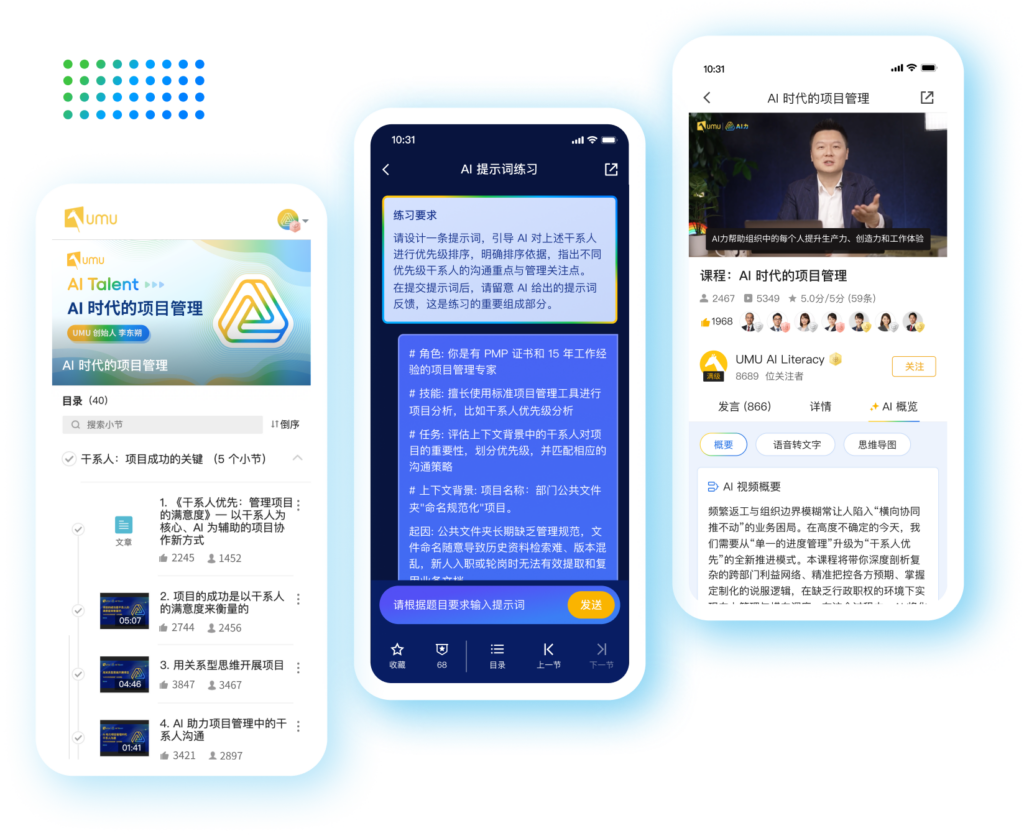
AI-powered word suggestion practice

Leveraging AI for In-Depth Stakeholder Analysis and Strategy Formulation

Comprehensively identify potential stakeholders for the project, and scientifically analyze and prioritize their advancement based on their authority, influence, and level of attention.

AI is used to tailor communication and expectation management strategies to address the unique needs and pain points of different stakeholders.

Quickly develop structured, practical negotiation strategies to overcome cross-departmental communication barriers and efficiently facilitate consensus among multiple parties.

Simulating unexpected opposition and unforeseen situations in a real business environment, this training exercises enhance the ability to respond quickly and flexibly under high pressure.

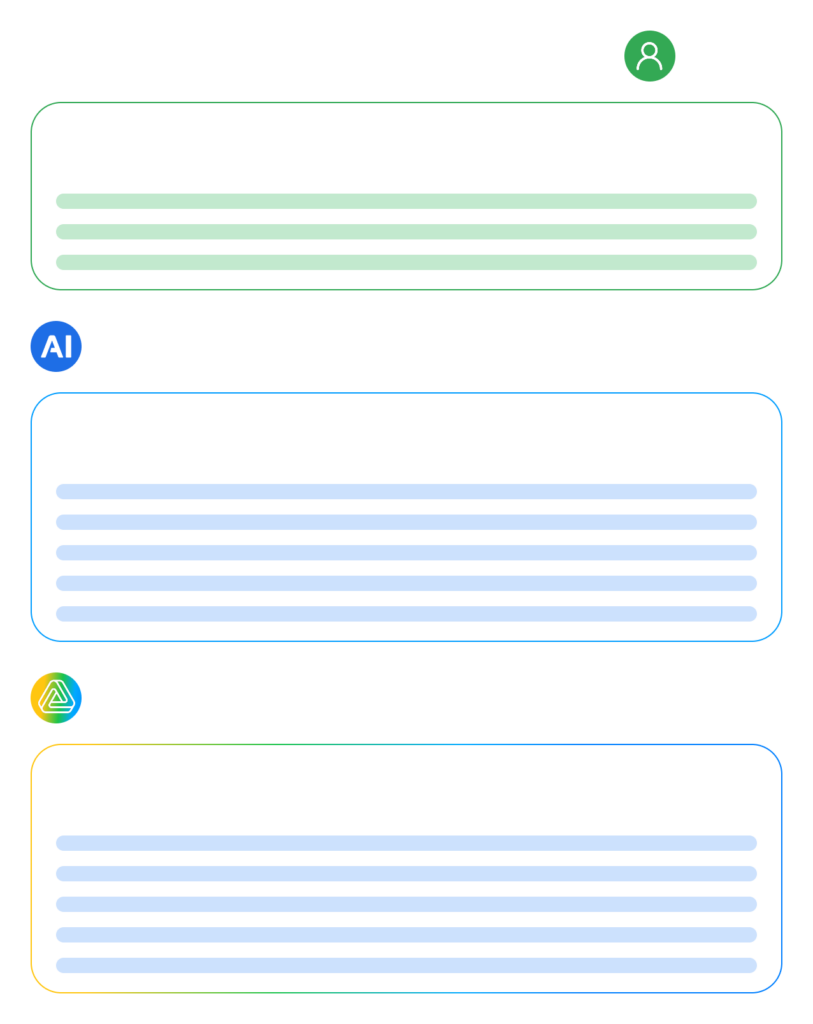
Learner

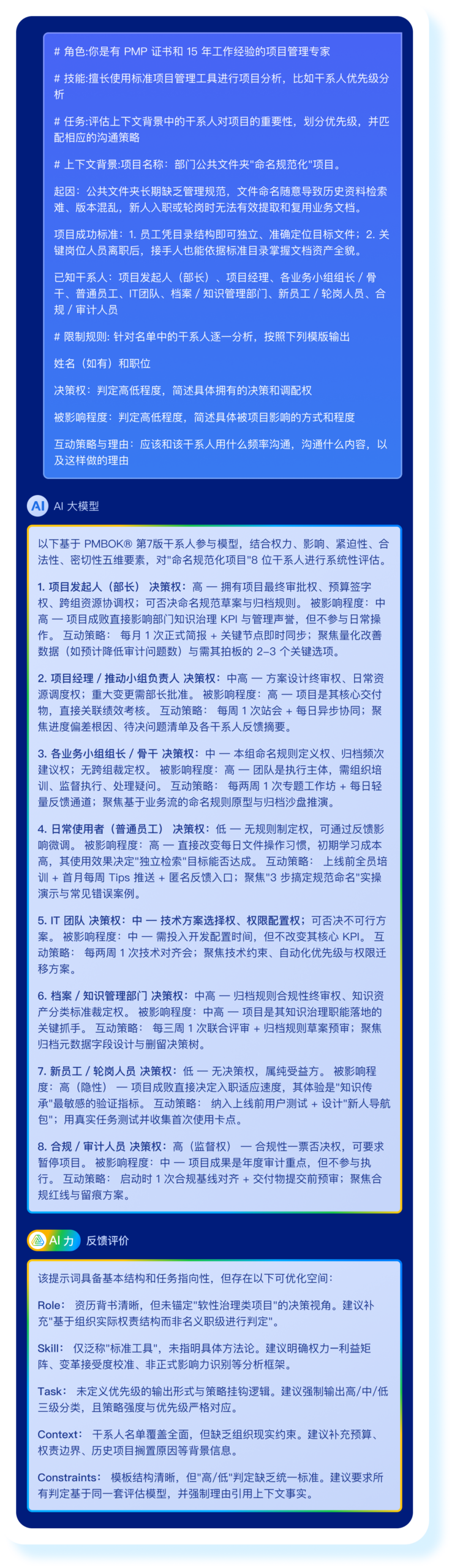
Prompt words for learner input

AI-generated content based on prompts

UMU AI coach provides real-time feedback on prompts.

LLM (Large Language Model)

UMU AI Coach

Expected returns

Personal-level change

Enhance influence and decision-making power through AI.
Even when faced with a lack of direct administrative authority, core staff and newly appointed managers can efficiently leverage AI to construct robust logic and holistic strategies. This effectively drives management and cross-departmental teams, demonstrating exceptional leadership without direct authority.

Project-level changes

Leveraging AI to improve stability and success rate.
By leveraging AI during the project initiation phase to accurately align expectations and eliminate cognitive biases, the rework rate in the later stages of the project is significantly reduced. This ensures on-time project delivery while achieving a perfect ending with extremely high stakeholder satisfaction.

Organizational change

Establish standardized norms and organizational assets.
Break free from over-reliance on employees' individual communication skills. Leverage AI to transform implicit personal success stories into replicable organizational assets, establishing standardized stakeholder collaboration norms, and comprehensively accelerating cross-departmental business processes and improving the quality of decision implementation.

UMU Official Talent Certification: Demonstrating the Professional Strength of Core Talents in the AI ​​Era

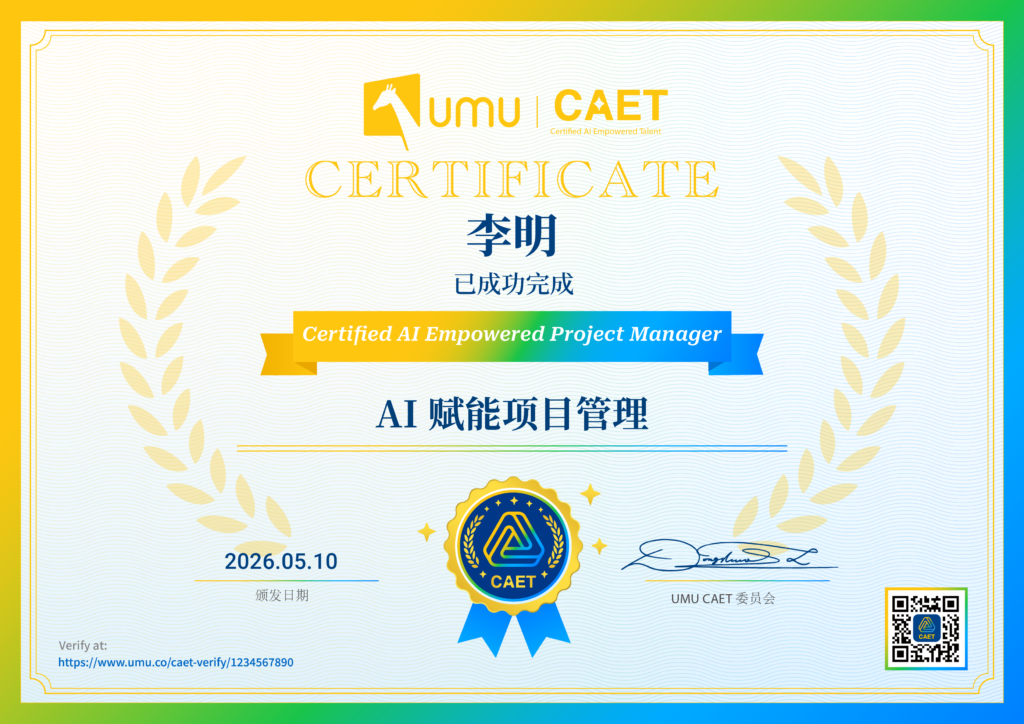
UMU CAET Certification
Certified AI Empowered Project Manager

Upon completion of all courses, you will receive an official and authoritative certification.

Supports one-click certificate download and sharing of exclusive verification links.

It can be easily synchronized to mainstream social and professional platforms.

Witness a leap in capabilities and create milestones in personal learning outcomes.

Helping companies select and accumulate high-value talent assets at the core of the organization.

AI-enabled stakeholder communication
Drive efficient organizational collaboration and project implementation